Starting a Flower Farm: What It Really Takes to Make a Business Bloom

Updated: Aug 14
Starting a flower farm doesn’t require acres of land or years of experience, but it does require the right foundation. A flower farm is essentially a small agricultural business focused on growing and selling cut flowers locally, often through farmers' markets, florists, or direct subscriptions.
Whether you’re a home gardener ready to scale up or a farmer looking to diversify, success comes from balancing growing knowledge with business discipline. Let’s walk through what you actually need to get started, and how to set yourself up for long-term success:
What Do You Need to Start a Flower Farm?
At its simplest, starting a flower farm means combining a manageable growing space with a plan to sell what you produce. You don’t need everything at once, but you do need a solid understanding of your land, your crops, and your market.
Quick Start: What You Need to Begin
Before diving into the details, it helps to see the core pieces of a flower farm at a glance:
Category | What to Consider |
Land | Sunlight, drainage, bed layout |
Soil | pH, organic matter, and fertility |
Water | Reliable source, drip irrigation |
Crops | Beginner-friendly flowers, succession planting |
Equipment | Hand tools, harvest buckets, and irrigation |
Sales | Market channels, pricing |
Records | Planting dates, yields, expenses |
Compliance | Licensing, insurance |
All the rest (the tools, the systems, and the scale) can grow with you.
Land and Soil Requirements: Building the Foundation First
Everything starts with your soil. You can have the best seeds and the perfect market, but without healthy soil, your results will always fall short.
Most flowers thrive in well-draining soil with a pH between 6.0 and 7.0. If you’re not sure where your soil stands, a simple soil test is one of the best early investments you can make.

From there, it’s about improvement. Many flower farmers rely on compost and organic matter to build soil health over time. If your native soil is heavy clay or overly sandy, raised beds can give you more control and better drainage—especially in smaller or intensive growing spaces.
If you’re already farming other crops, you likely have a head start here. Flowers can often thrive in the same soil systems with only minor adjustments.

Water and Irrigation: Consistency Over Complexity
Water is one of the most critical and often underestimated inputs in a flower farm. While flowers don’t typically require as much water as some vegetable crops, they do require consistent and well-timed moisture to produce strong stems and high-quality blooms.
The biggest mistake new growers make is thinking in terms of “how much” water, rather than how consistently it’s applied. Inconsistent watering, letting soil dry out completely, and then overcompensating can lead to weak root systems, stunted growth, and lower-quality flowers that won’t hold up well after harvest.
Most small-scale flower farms rely on drip irrigation systems, and for good reason. Drip irrigation delivers water directly to the root zone, which minimizes evaporation and keeps foliage dry. That last point is especially important because wet leaves can create the perfect environment for fungal diseases like powdery mildew or botrytis, both of which are common issues in flower production.
For growers just getting started, a simple setup of drip lines connected to a timer can go a long way. You don’t need a complex system on day one, but you do want something that allows you to:
Water early in the day (when plants can absorb moisture efficiently)
Maintain even soil moisture across your beds
Reduce the need for manual watering during busy periods
As your farm grows, irrigation becomes less about convenience and more about risk management. A missed watering during a hot stretch can set you back days or even cost you an entire crop cycle. On the flip side, overwatering can lead to root rot and wasted inputs.
Another factor to consider is your water source. Whether you’re using well water, municipal supply, or collected rainwater, consistency and quality matter. Some growers even test their water to ensure it’s not contributing to nutrient imbalances.

This is also an area where better record-keeping pays off quickly. Tracking when and how much you irrigate and how your crops respond helps you dial in your approach over time. Using a platform like Farmbrite, you can log irrigation schedules alongside crop performance, giving you a clearer picture of what’s working and what isn’t.
Over time, irrigation shifts from being a daily chore to a controlled, repeatable system, one that supports healthier plants, stronger stems, and more predictable yields.
Light and Climate: Working With Your Environment
Light is one of the simplest requirements to understand and one of the hardest to control. Most cut flowers thrive in full sun, typically 6 to 8 hours of direct sunlight per day. Anything less can result in weak stems and reduced blooms.
That being said, your local climate plays an equally important role. Temperature swings, humidity levels, and seasonal patterns all influence what you can grow and when.
Understanding your first and last frost dates is critical. These dates define your growing window and help you plan when to start seeds, transplant, and expect harvests. In regions with shorter growing seasons, timing becomes even more important.

Some growers extend their season using low tunnels, hoop houses, or simple row covers, allowing them to plant earlier in the spring or continue production later into the fall. Others embrace seasonality and focus on maximizing production within their natural window.
Heat is another factor to consider. While many flowers love the sun, extreme heat can stress plants and shorten bloom times. In those cases, practices like mulching, proper spacing, and strategic watering can help mitigate stress.

Over time, you’ll start to recognize patterns in your own microclimate, such as areas that warm up faster, spots that hold moisture longer, or sections of your field that consistently perform better. Capturing those observations in a system like Farmbrite helps you make more informed planting decisions year after year.
Seeds, Bulbs, and Plants: Starting Smart
When you step into flower farming, you quickly realize that planting isn’t a one-time event; it’s an ongoing cycle.
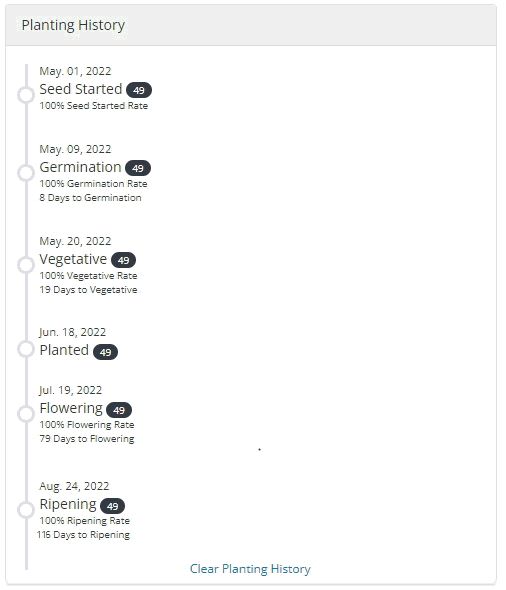
Your crops will typically come from seeds, bulbs, corms, or tubers, each with its own timing and management requirements. Annual flowers grown from seed often provide the most flexibility and affordability, while bulbs and tubers (like tulips or dahlias) can deliver high-value blooms with proper care.
But the real key to a successful flower farm is succession planting. Instead of planting everything at once, you stagger your plantings over days or weeks. This ensures that as one batch of flowers finishes blooming, another is just beginning. Without succession planting, you risk having too much product at once, and then nothing to sell a few weeks later.

Managing this effectively requires more than a calendar in your head. You’ll need to track:
Germination timelines
Expected harvest windows
This is where Farmbrite becomes especially powerful. By mapping out your planting schedule and tying it to actual results, you can refine your timing each season and build a system that delivers consistent blooms when you need them most.
Beginner-Friendly Flowers to Start With
If you’re new to flower farming, start with crops that are productive, forgiving, and in demand.
Flower | Difficulty | Bloom Season | Why It’s Great for Beginners |
Zinnias | Easy | Summer | Fast-growing, colorful, productive |
Sunflowers | Easy | Summer–Fall | High demand, easy succession planting |
Cosmos | Easy | Summer | Long blooming, low maintenance |
Snapdragons | Moderate | Spring/Fall | Strong florist demand |
Dahlias | Moderate | Mid–Late Summer | Premium pricing potential |
Tools and Equipment: Start Simple, Then Scale
It’s easy to fall into the trap of thinking you need specialized equipment to run a successful flower farm. In reality, most growers begin with a surprisingly simple toolkit.
Hand tools for planting and weeding, seed-starting trays, irrigation supplies, and basic harvesting tools will carry you through your first season. As your operation grows, you might add landscape fabric, support netting, or simple structures for season extension. The key is to let your workflow guide your investments. If a task is slowing you down or creating inconsistency, that’s where the right tool can make a difference.
Post-harvest handling is another area worth considering early. Even simple steps like keeping flowers in clean water and out of direct sun can dramatically improve quality. Over time, you may choose to invest in cooling or storage solutions, but those decisions should come after you’ve validated your market.

Keeping track of your equipment and associated costs is another often-overlooked piece of the puzzle. Farmbrite allows you to log assets, track usage, maintenance, and connect those costs back to your overall operation, giving you a clearer picture of where your investments are paying off.
Essential Starter Tools and Supplies
You don’t need an elaborate setup in your first season, but a few basics will make a big difference:
Quality hand tools (trowel, hoe, pruners, harvest snips)
Seed trays and propagation supplies
Compost and soil amendments
Drip irrigation or soaker hoses
Harvest buckets and clean storage containers
Plant support netting (for taller flowers)
A shaded area for post-harvest handling
The goal is to support efficiency without overspending too early.
Pest and Disease Management: Staying Ahead of Problems
No matter how carefully you plan, pests and diseases will show up at some point. The goal isn’t to eliminate them entirely; it’s to manage them in a way that protects your crops without creating new problems.
Healthy plants are your first line of defense. Good soil, proper spacing, and adequate airflow all reduce the likelihood of disease taking hold. Overcrowded beds and excess moisture are often the root cause of common issues.
Regular observation is just as important. Walking your fields daily, no matter how briefly, helps you catch problems early, when they’re easier to manage. Many flower farmers adopt integrated pest management (IPM) strategies, combining cultural practices, biological controls, and minimal chemical intervention when necessary.
What often separates experienced growers from beginners is their ability to recognize patterns. Certain pests appear at predictable times. Specific crops may be more vulnerable than others.

Tracking these patterns is where farm record-keeping becomes invaluable. With Farmbrite, you can log pest or disease occurrences alongside crop data, helping you anticipate and prevent issues in future seasons.
Record Keeping and Planning: The Backbone of a Successful Flower Farm
This is where hobby gardening turns into a real farm business. If there’s one habit that consistently separates successful flower farms from struggling ones, it’s farm record keeping.
It’s easy to rely on memory when you’re starting out, but as your operation grows, details start to blur. Without records, those answers are guesswork.
What did you plant last year?
Which varieties performed best?
When did you hit peak demand?

By tracking your crops, inputs, yields, and sales, you begin to see your farm as a system, not just a collection of tasks (although we have those too). You can identify what’s working, what isn’t, and where to focus your efforts. Farmbrite simplifies this process by bringing everything into one place. Instead of juggling notebooks or spreadsheets, you have a centralized system that connects your planting schedules, inventory, sales, and financials.
Over time, this turns your day-to-day work into a long-term strategy.
Marketing and Sales: Growing What You Can Sell
A flower farm succeeds when what you grow matches what people want to buy.
That might sound obvious, but it’s one of the most common disconnects for new growers. It’s easy to fall in love with certain varieties without confirming whether they actually sell in your market.
Start by identifying your primary sales channels. Farmers' markets, local florists, direct sales, and subscription models each have different expectations and pricing structures. Then, build your crop plan around those channels.
USDA Local Food Directories: This is the most comprehensive resource, providing lists of farmers markets, on-farm markets, CSAs, and food hubs searchable by city or zip code.
LocalHarvest: A frequently updated website to find farmers' markets, family farms, and other sources of sustainably grown food in your area.
Social Media and Online Searches: Facebook Marketplace is a useful tool for finding local food, along with searching for "farmers markets near me" to find local, up-to-date listings.
State-Specific Resources: Many states have dedicated associations or websites, such as Alabama Sustainable Agriculture Network or California Agritourism Directory, that list local food options.
Marketing doesn’t have to be complicated. Sharing your process, your seasonality, and your story can go a long way in building customer loyalty. People are drawn to locally grown flowers because they feel more personal and more connected.
Farmbrite can support this side of the business as well, helping you manage customer relationships, track orders, and understand which sales channels are performing best.
Labor: Planning for the Workload
Flower farming is rewarding, but it’s also labor-intensive. From seeding and transplanting to harvesting and arranging, the workload can ramp up quickly, especially during peak bloom periods. If you’re starting on your own, it’s important to plan realistically. Overplanting in your first season can lead to burnout and missed opportunities.
As your farm grows, you may consider bringing on part-time or seasonal help. Even a small amount of additional labor during critical windows can make a significant difference.

Planning your workload, especially through succession planting and efficient systems, helps keep things manageable. And by tracking labor alongside your crops in Farmbrite, you gain a better understanding of where your time is going and how to optimize it.
Licensing, Insurance, and Compliance: Treating It Like a Business
Even a small flower farm comes with real business responsibilities. Depending on your location and sales channels, you may need:
A business license
Sales tax registration
Farm insurance to protect your operation
Certification if you plan to market as organic
These steps might feel administrative, but they’re essential for protecting your farm and building credibility with customers. It’s easy to focus on the growing side of flower farming and overlook the business requirements. But taking care of these early helps protect your operation and builds credibility with your customers.
Start Small, Stay Organized, and Grow Intentionally
Starting a flower farm is both exciting and demanding. It blends creativity with discipline, and beauty with hard work.
The good news is you don’t need to have everything figured out from day one. Start with a small plot. Focus on a few reliable crops. Learn your market. And integrate systems like Farmbrite to keep everything organized as you grow.
Because in the end, success in flower farming doesn’t come from doing everything at once. It comes from doing the right things consistently, season after season.


