What Is Farm Management Software? Benefits, Features, Examples & Trends (2026 Guide)

Updated: May 27, 2026

What Is Farm Management Software?
Farm management software (FMS) is a digital platform that helps farmers and ranchers organize, track, and optimize farm operations, including crop planning, livestock management, inventory, finances, equipment maintenance, employee tasks, and regulatory records.
Modern farm management software often includes:
Real-time farm records
Financial reporting
Livestock and crop tracking
Task management
Integrations with precision agriculture tools
The goal of farm management software is to help farms improve efficiency, profitability, compliance, and decision-making through centralized digital recordkeeping.
An Introduction to Farm Management Software
Farm Management Software (FMS) is a type of farm software that helps farmers run their businesses more effectively. It can help you keep track of your crops and livestock, creating reports and alerts that tell you when to harvest crops or move animals to different pastures.
FMS even integrates with other programs, such as GPS tracking devices, soil analysis tools, and weather monitoring and recording devices. In this article, we will talk more about how Farm Management Software is helpful on the farm.
Farm Management Software Adoption Statistics (2025–2026)
The agriculture industry is rapidly digitizing as farms adopt software and precision agriculture technologies to improve profitability and efficiency.
Recent industry data shows:
The global farm management software market was valued at approximately $3.2–4.2 billion in 2024–2025 and is projected to exceed $10 billion by 2030. (Fortune Business Insights)
Analysts forecast annual growth rates between 10–17% CAGR, driven by cloud software, AI, IoT sensors, and precision agriculture adoption. (Fortune Business Insights)
USDA and agriculture technology researchers continue to emphasize the growing role of digital agriculture and precision farming technologies in improving farm efficiency and sustainability. (National Institute of Food and Agriculture - USDA)
Larger farms continue to lead software adoption, but cloud-based and mobile farm management platforms are making digital tools more accessible to small and family-owned farms. (Farm Doc Daily, University of Illinois)
How Does Farm Management Software Help Farmers?
FMS is a program that helps farmers keep track of their crops, livestock, and equipment. It can also help farmers manage customer relationships by providing information on past purchases, allowing them to create targeted marketing campaigns based on those past purchases.

You can use it to track everything from when you last gave vaccinations to your livestock, when you planted your fields, and what your customers' contact information is, to sales receipts. It also provides tools for managing your finances and gives you access to data about what's happening on your farm at any given time so that you can make informed decisions about how best to use your resources.
Who Uses Farm Management Software?
Let's take a quick look at the varied types of agricultural and agricultural-related operations that can and already do make use of Farm Management Software:
Ranches
Livestock operations
Multi-generational farms
Farm nonprofits and rescues

Additional Resources
We have a wide variety of Customer Success Stories with Farmbrite customers, as well as Use Case articles that highlight making use of Farmbrite in scenarios across a broad spectrum of agricultural operations.
How To Use Farm Management Software On Your Farm
There are a multitude of ways to use FMS on your farm to aid in management and business decisions. FMS can help you keep track of your crops and livestock, creating reports and alerts that tell you when to harvest or move animals to different pastures.
You can also use FMS to manage your inventory and expected harvests for products. It will help you plan how much land is needed for each crop type in order to meet projected production goals, while also keeping tabs on how much money it will cost per unit sold (and whether those revenues are enough).
In addition, FMS can help you manage your supply chain and track the movement of goods from your farm to the consumer. It will help you keep track of how many pounds or tons of each crop were produced, how much inventory is in storage, and where it is located (on-farm or off), what products are being shipped off-site, and traceability from harvest to sale.
You can also use an FMS tool to create a companion online store for your farm. An online store that you can either embed within your existing website, or if you don't already have one, use as your operation's internet presence, is a great way to reach customers, advertise products, sell products online, and provide information about your farm.

Examples of How Farmers Use Farm Management Software
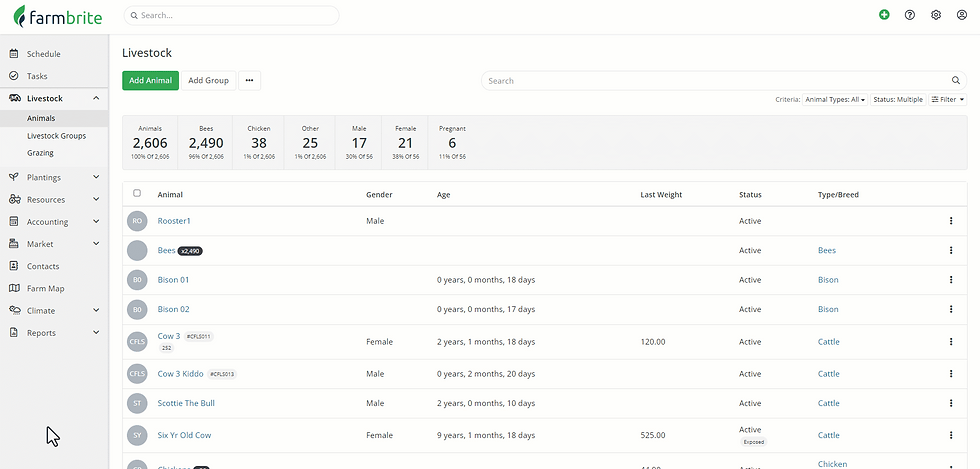
Livestock Recordkeeping
A cattle ranch may use farm management software to track vaccinations, breeding dates, treatment withdrawal periods, feed costs, and animal sales.
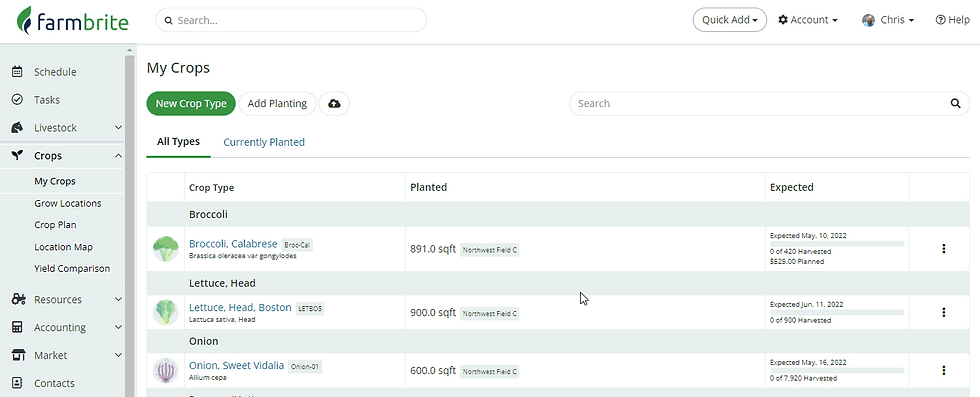
Crop and Field Planning
Vegetable growers can manage planting schedules, irrigation records, harvest forecasting, and field rotations from a single dashboard.

Financial Management
Many farms use farm management software to replace paper notebooks or spreadsheets with digital profit-and-loss reporting and expense tracking.

Mobile Farm Operations
Mobile apps allow farmers to record data directly from the field, barn, or tractor instead of waiting to update records later. Farmbrite wants your experience in the field to be as rewarding and productive as when at your desk, when working with your farm's data.
Using Farm Management Software With Other Programs
Farm management software integrates with other programs, such as GPS tracking devices, soil analysis tools, and weather monitoring devices. This allows you to use your FMS as a central hub for all of your farm's data. Farmbrite offers a number of existing Zapier integrations to integrate your data with a variety of other applications and platforms. And for those with a bit more technical expertise, we also offer API access.
Old Way (Manually) vs Modern Way (FMS)
Farm Management Task | Manual Method | Using Farm Management Software |
Livestock records | Paper notebooks | Centralized digital records |
Financial tracking | Spreadsheets | Automated reports |
Field notes | Clipboards | Mobile app updates |
Equipment maintenance | Memory/manual logs | Scheduled maintenance reminders |
Compliance records | Filing cabinets | Searchable cloud records |
AI + Precision Agriculture
Modern farm management software is increasingly integrating with precision agriculture technologies such as GPS-guided equipment, IoT sensors, weather data, and AI-powered analytics. These technologies help farmers make more informed decisions about planting, irrigation, livestock health, labor allocation, and input costs.
What Are The Benefits of Using Farm Management Software?
FMS is an important resource that helps farmers run their businesses more effectively. It allows you to manage all aspects of your farm, including crops, livestock, and equipment. It also provides features like reporting and alerts so that you can stay on top of any issues that arise in real-time. Farm management software helps farmers:
Save time on recordkeeping
Improve organization
Track profitability
Reduce paperwork
Improve livestock and crop visibility
Support compliance reporting
Make better operational decisions
Access farm records from mobile devices
Centralize farm data in one system
The best farm management software is designed to be easy to use and intuitive so that even beginning farmers can set it up with minimal training. This makes it easier for you to start managing your farm like a professional. That is how we have built Farmbrite. To learn more about Farmbrite’s wide range of features and capabilities, we invite you to check out our how-to guides and videos, and take advantage of a free, 14-day, fully functional trial experience.
Conclusion and Key Takeaways
FMS is a good choice for farmers who need to manage multiple aspects of their business. The software allows you to easily track the status of your crops, livestock, and equipment so that you can determine what needs to be done at any given time.
Farm management software helps farms centralize operations and records
Digital agriculture adoption continues to grow rapidly
Modern platforms support livestock, crops, finances, inventory, and mobile access
Cloud and mobile tools make FMS accessible for farms of all sizes
Farm management software can help improve organization, efficiency, and profitability
If you're ready to make the move to a full-featured, robust, and mobile-ready FMS, we invite you to give Farmbrite a try. We look forward to speaking with you!
Frequently Asked Questions (FAQs)
What does farm management software do?
Farm management software helps farmers organize records, track operations, manage finances, monitor livestock and crops, and improve farm decision-making.
Is farm management software worth it for small farms?
Yes. Many small farms use farm management software to replace paper records and spreadsheets, improve organization, and save time.
What features should farm management software include?
Important features include mobile access, livestock tracking, crop planning, financial reporting, task management, inventory tracking, and cloud backups.
Can farm management software work offline?
Some platforms, including Farmbrite, offer offline mobile capabilities for farms with limited internet connectivity.
What is the difference between precision agriculture and farm management software?
Precision agriculture focuses on sensor-driven and GPS-enabled farming technologies, while farm management software helps organize operational, financial, and recordkeeping workflows.


